
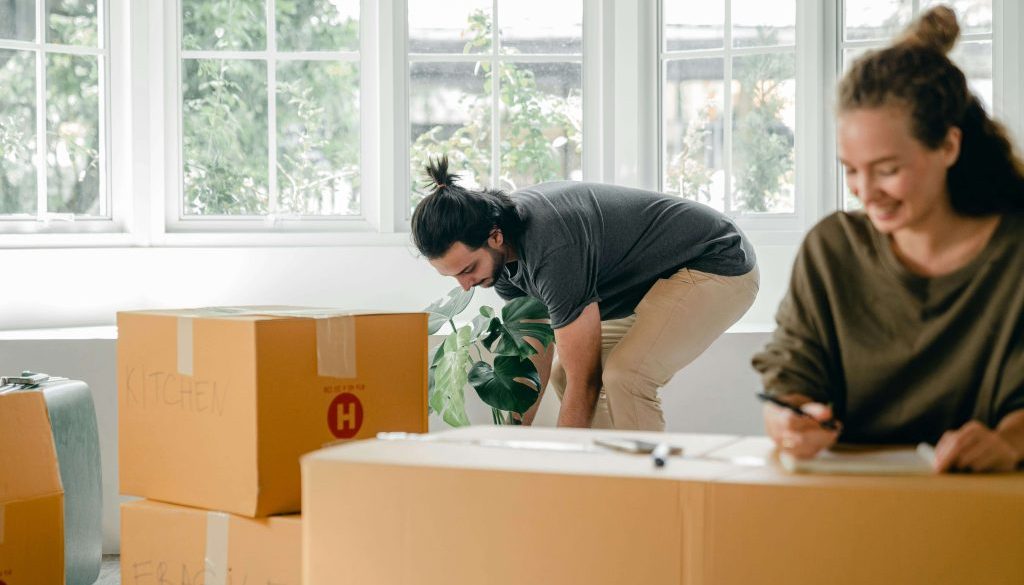
How to make an organised move (and survive the attempt) with these 6 tips
If you're about to move house, you're probably wondering all the time as the day approaches. “How do I do all this?”But don't worry, we've all been there.
Moving home can be much simpler than it seems when you know where to start. That's why today we bring you a clear guide, with tips that work. to really know how to make an organised move.
It starts with what you can't see: mental planning.
Before you play a single box, sit down for five minutes and ask yourself this question: What kind of move do I want to have?
A chaotic one, where you end up putting everything in bin bags the night before... Or an organised one, where you arrive at your new home knowing where everything is? The difference is in how you prepare.
We recommend that you start planning your move with, at least, one month in advance if possible. The earlier you start, the less stress you will have on the key days because you will have had time to think about every detail and get everything ready..
Think of the move as a project in which you need to:
- A clear date or range of days on which the move will take place.
- Know if you will have help (family, friends or a removal company like Gil Stauffer),
- Calculate how much stuff you really have to move.
And here comes the next essential step...
The big filter: keep, donate or throw away
Moving house is the perfect excuse, but it is also necessary to do some cleaning.
We're not just talking about throwing away old papers or boxes, but deciding what is really worth keeping. The key is consciously value your objectsDoes it work for you, do you use it, do you like it, does it make sense to charge it to another house?
The less you take with you, the cheaper, faster and more pleasant your move will be.. And to start this classification you only need to start with three piles or separations:
- What remains (the essentials).
- What is donated or sold (better to give it a second life or take an extra one).
- What is thrown away (no regrets).
Do it room by room and if you can, take the opportunity to sell furniture or appliances that don't fit in your new home, and you will gain space and money.
Materials you really need (and those you don't)
You can move in with boxes from the supermarket or the shop next door... But you'll be very grateful to have a material having a minimum quality.
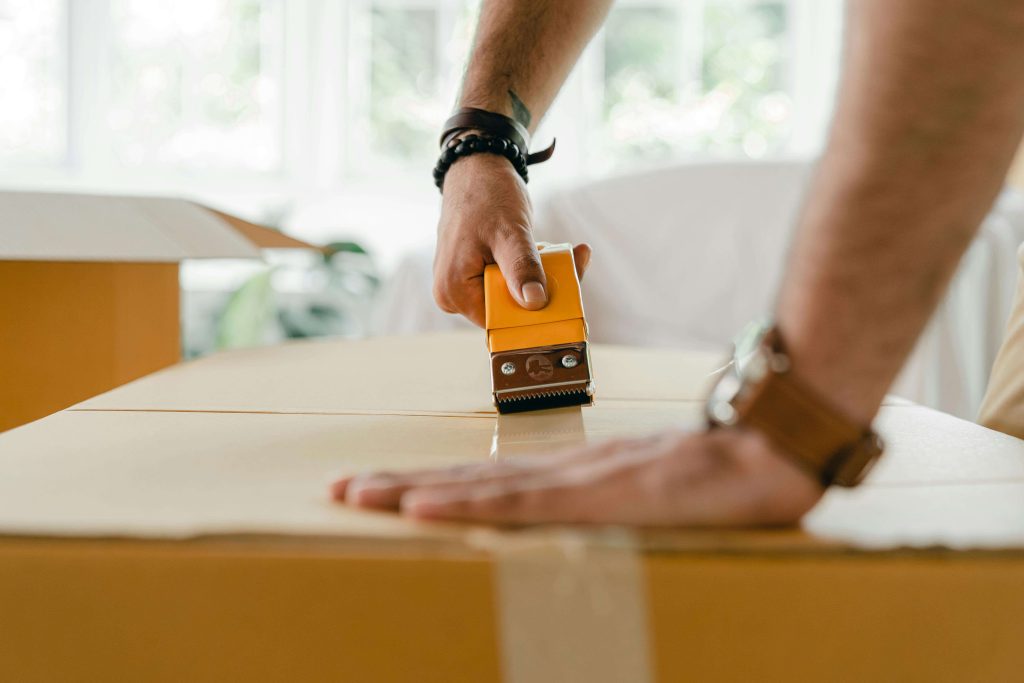
And if you save on boxes and protective materials, it can be expensive if what you want is to save money. The guards inside end up breaking.
But regardless of whether you go for the cheaper options or choose something more premium, the basics you will need are:
- Boxes of different sizes (and that are sturdy).
- Wide packing tape.
- Permanent marker.
- Bubble wrap or blankets.
- Airtight bags for small parts.
- Covers for mattresses and clothing.
- Scissors or a cutter
- Screwdriver
And if you ask yourself why we do not include rubbish bags, The answer is quick: they break easily, are not watertight and will end up giving you more problems than benefits.
And a trick for professionals: do not fill large boxes with heavy objects. The small ones are for books and heavier items, the large ones for clothes and textiles.
If you fill the biggest boxes with what weighs the most, your back and all the things that can break under the weight will feel it and the blows while they are inside.
Packing smart: speed does not mean clutter
When you start packing your belongings, start with what you use the least: books, decoration, clothes from other seasons... The typical mistake is to pack what you need too soon and end up having to unpack boxes out of necessity.
As you fill boxes, put clear labels to help you identify what each one has, for example: room + contents + if fragile.
If you want to go the extra mile, take photos of some drawers or appliances before dismantling them. That way you can assemble them in the new house without fighting with mysterious wires.
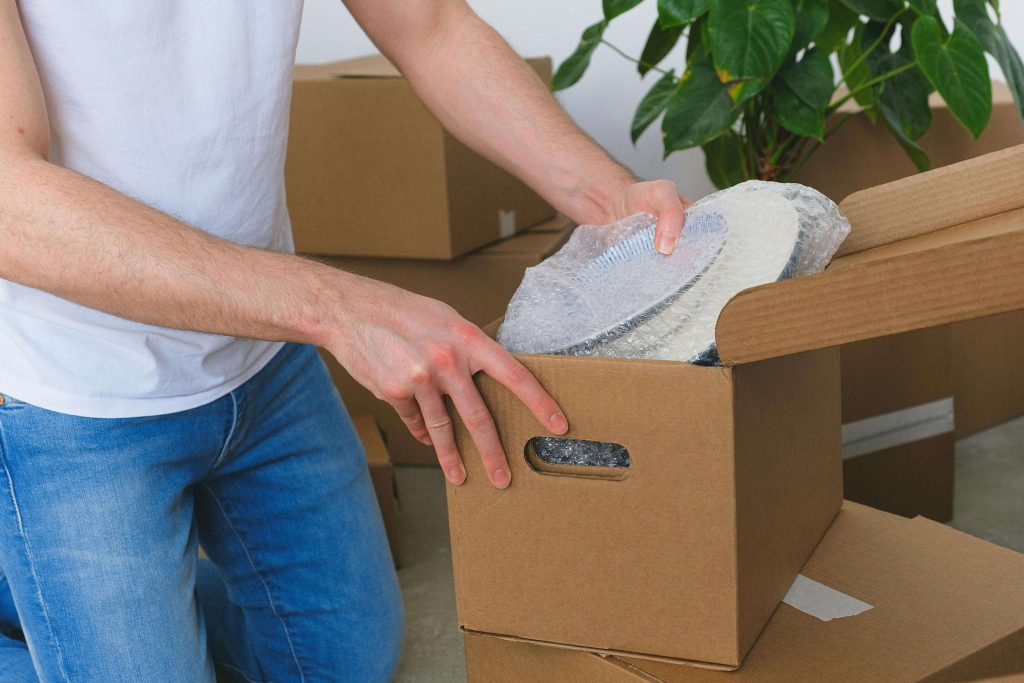
A very realistic bonus tip: have a “first day survival” box” with what you will need immediately when you arrive at your new home:
This includes porters, pyjamas, two changes of clothes, toiletries, water, instant coffee, scissors, snacks, documentation...
Your future self will thank you.
The critical week: order, calm and strategy
In the last few days before the move, the key is to simplify:
- Keep only the essentials and leave the rest ready to load.
- If you're moving for the weekend, try to have everything packed. at the earliest on Thursday.
- You will be able to start carrying the boxes first thing in the morning and you won't have to do it tired after having to spend time to finish packing the boxes.
Moving day: Breathe and trust
When the moving day(s) arrives it is normal for something not to go as planned. Even so, if the preparation has been good, on that day you will only have to follow the rhythm: loading, moving, unloading, putting the basics in place and resting.
An important piece of advice: don't try to place it all on the same day. Assume that it will take 2 or 3 days for your house to start taking shape again.
As you can see, An organised move is, above all, a move that has been prepared in good time.
Downsizing, sorting, packing methodically and staying calm are your best tools. If you assume there will be contingencies, but have control over the essentials, you'll arrive at your new home without feeling like you've fought a battle.
Y, if you want to make things even easier, you can always trust in Gil Stauffer, where our more than 100 years of experience will be the guarantee of a well thought-out move in which nothing is left to chance.
In order to you just have to enjoy the moment of opening the door to your new stage.


 English (UK)
  Español